
12 Steps to Making Perfect Bread
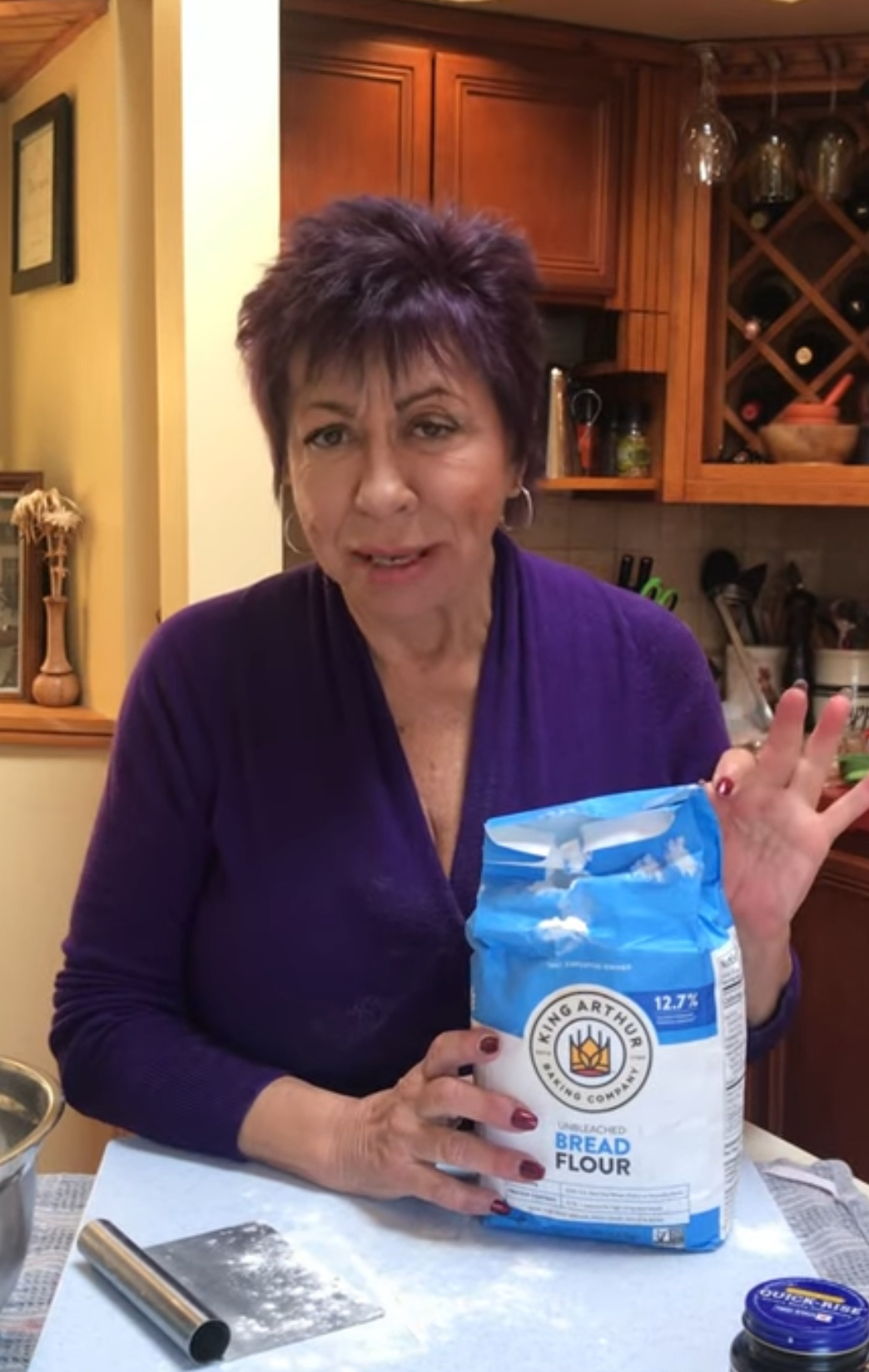
Here, I outline in detail the 12 steps used by professional bakers around the world – learn them and you will know how to bake bread from scratch! All yeast doughs go through these basic steps with some slight variation.

The 12 Steps of Bread Baking:
Scaling Ingredients
Mixing
Bulk Fermentation (first rise)
Folding (sometimes called punching)
Dividing
Pre-shaping or Rounding
Bench Proofing or Resting
Makeup and Panning
Proofing (second rise)
Baking
Cooling
Storing
Step 1: Scaling Ingredients
Scaling, or measuring, involves portioning your ingredients according to the recipe. Weighing ingredients is highly recommended for baking as it provides the most accuracy. Always opt for a digital metric scale for precise measurements in baking.
Scaling Ingredients – Step 1 of 12 Steps of Bread Baking
In this blog, you'll find bread recipes with metric measurements, except for small amounts like teaspoons or tablespoons. Tip: If needed, you can look up conversion rates from metric to imperial online. However, using a digital scale set to metric is strongly advised.
Step 2: Mixing
Mixing combines all ingredients into a single mass. This evenly distributes the dry ingredients and incorporates the liquid to hydrate the flour, resulting in a rough dough. As mixing continues, the dough smoothens due to gluten development from further mixing, kneading, or folding. Eventually, the dough pulls away from the bowl edges or tightens when hand kneaded, forming a smooth, elastic dough. In the no-knead method, subsequent folds achieve the same effect, creating a pliable, stretchable dough that maintains its shape.
Step 3: Bulk Fermentation (first rise)
Fermentation involves yeast acting on the sugar in the dough. Yeast, a live culture, feeds on sugar and multiplies. Flour contains sugar, and yeast thrives in this warm, food-rich environment. As yeast consumes sugar, it produces an enzyme that converts sugar into carbon dioxide, creating bubbles that give bread its rise. These bubbles stretch the gluten, forming a perfect crumb structure.
For enriched doughs with longer mixing times, bulk fermentation can be quick, ranging from 30 minutes to 2 hours, depending on the recipe and temperature.
Straight doughs take over 3 hours to develop and can extend to 8 hours or more, based on yeast activity and environment. (Reusable bowls with lids simplify bulk proofing). Regardless of dough type, all dough will double or triple during fermentation.
Step 4 - Folding the dough
Once the dough has doubled, fold it, sometimes referred to as "punching" it down—though punching alone doesn't complete the process. Punching releases some carbon dioxide, while folding develops the gluten structure. First, deflate the dough, then fold the sides over the center. After folding, gently flip the dough so it rests on the folds, leaving a smooth surface on top.
Step 5: Dividing
This step involves portioning the dough into desired weights or sizes, allowing for shaping and panning. Handle the dough gently to preserve the gluten and carbon dioxide structure developed during bulk fermentation. Flour the dough's top where you plan to cut, and use a bench scraper or knife to gently push through the dough, avoiding sawing motions.
Step 6: Pre-shaping or Rounding
This step loosely shapes the portioned dough to resemble the final form (e.g., round for a boule, or long and narrow for a baguette). Treat the dough gently to maintain its structure. Form the dough loosely into the desired shape, keeping the cut side down. The top should have a relatively smooth, stretched skin to hold in the developing gas.
Step 7: Resting
During this step, cover the loosely shaped dough with a cotton kitchen towel or plastic wrap and let it relax on the countertop for 10-20 minutes. This relaxes the gluten in preparation for final shaping in the next step.
Step 8: Shaping a Dough Ball
After resting, shape the dough into the desired final form. For solid shapes, tighten the dough into a round, baton, baguette, etc. For a round, drag the dough over the counter in a circular motion. This requires practice to achieve the desired shape, but once you master the technique, you'll find a rhythm.
Ensure the shape is taut with a tight skin on the exterior. For a loose crumb with large holes, like artisan or pizza loaves, handle the dough gently to create simple round or oval shapes with a tight skin, avoiding excessive gas release. Place the shaped dough on or in the baking pan. If using a baking stone, let the dough rise on a floured countertop. For tight-crumb recipes (e.g., brioche, challah, cinnamon rolls), flatten, roll, or braid the dough into the desired shape.
Step 9: Proofing (second rise)
Next, proof the dough for the final rise. Cover it with a floured cotton towel or sprayed plastic wrap. This fermentation creates gas that expands in the oven, forming the final crumb structure. Shaped dough usually doubles in size, taking 30 minutes to 1 hour for enriched doughs. Artisan doughs leavened with yeast take 45 minutes to 1.5 hours, depending on yeast quantity. Sourdough may take 1 to 2 hours, as natural yeast develops slower. All times are estimates, as temperature affects proofing duration.
Estimating dough readiness for baking requires practice. If the dough appears doubled and passes the "poke" test, it's likely ready for the oven. Perform the test by poking the dough; if the indent springs back quickly, it's not ready. If it springs back slowly, it's ready. If it doesn't spring back, it's over-proofed.
Step 10: Baking
Once the proofed loaves or rolls are ready, carefully remove the covering. Prepare the dough for baking as follows:
Preparation for Baking
Egg wash – Enriched doughs benefit from an egg wash for shiny tops or seed adhesion. Egg wash isn't used on artisan loaves. Whole eggs with water create the glossiest finish; egg whites with water yield a matte finish.
Water Spritz – Mist the dough with water using a fine sprayer to mimic steam oven action at home, preventing a hard, thick crust.
Scoring – Make cuts on the bread's top to allow steam to escape during baking, preventing tearing. If using a Dutch oven, scoring isn't necessary unless you prefer an artistic top. Typically reserved for artisan breads baked at high temperatures on a stone, in a Dutch oven, or on a baking sheet.
Brush with Butter – Melted butter wash complements sandwich breads. Use a pastry brush to apply butter on the loaf top, then score down the center.
Transfer Proofed Dough to the Oven
Preheat the oven to the recipe's specified temperature. Hearth breads on a stone or sheet pan, plus artisan loaves in a Dutch oven, can be baked at higher temperatures, 425°F (220°C) and above. Bake enriched doughs (e.g., sandwich breads) at lower temperatures, 350°F (175°C). Carefully load the oven to avoid burns! Slide doughs off the counter with a peel or flat cookie sheet onto the baking stone or into a preheated Dutch oven. If proofed on a metal baking sheet, place it directly in the oven.
Professional bread ovens often use steam injection. Steam keeps the crust moist while the bread expands during the first 10 minutes of baking. For a steam-assisted bake, place a metal pan of hot water on the oven's lower rack. Loaves are typically placed on the middle rack to prevent bottom burning. In smaller ovens, place a second pan under your pan halfway through baking to avoid scorching.
When is Bread Done Baking?
Bread is done when it reaches the temperature specified in the recipe on a kitchen thermometer. If unsure, rely on sight and sound. Bread should be nicely browned and sound hollow when tapped. Enriched doughs or airier loaves like focaccia bake to a golden-brown color, while sugar-free artisan loaves can be baked to a darker brown based on preference. Remember - A darker crust means more flavor, so don't hesitate to let it brown deeply.
Step 11: Cooling
Carefully remove loaves from the oven. Place pans on a heatproof surface and remove baked items immediately. Place loaves on a cooling rack for airflow on all sides. Allow bread to cool for 20-30 minutes before cutting. The bread's interior continues to cook as it cools. The steam inside is hot, and the crumb too tender to cut immediately. Thick-crusted loaves, like artisan bread, will crackle as they cool.
Step 12: Storing
Bread is best consumed on the day it's made. If storing, keep it at room temperature. Avoid refrigeration, which causes staleness. Uncut artisan loaves with crisp crusts can be left in the open air overnight. Once cut, store with the cut side down on a cutting board for 24 hours. For enriched doughs, once fully cooled, wrap in an airtight bag. After 24 hours, slice the loaf, place in a freezer-proof bag, and freeze. Uncut loaves can be frozen whole.
To reheat frozen loaves, follow these steps:
Unwrap the frozen loaf.
Thaw the whole loaf at room temperature.
Preheat the oven to 375°F (190°C).
Place the thawed loaf on a sheet pan.
Bake in the preheated oven for 10 minutes or until warmed through.
If concerned about excessive browning, loosely cover the loaf with aluminum foil.
IMPORTANT: Do not place warm bread into plastic bags, as moisture will condense and spoil the bread. Similarly, artisan loaves with thick crusts should not be stored in plastic, as they will lose their crispness and become leathery. Tip: Slice artisan loaves and toast them to refresh the bread.


Comments