
You say Potato, I Say Pot-aw-toe
- Chef Dedee, The Italian Diva Royale
- Aug 2, 2024
- 3 min read
Updated: Dec 2, 2025
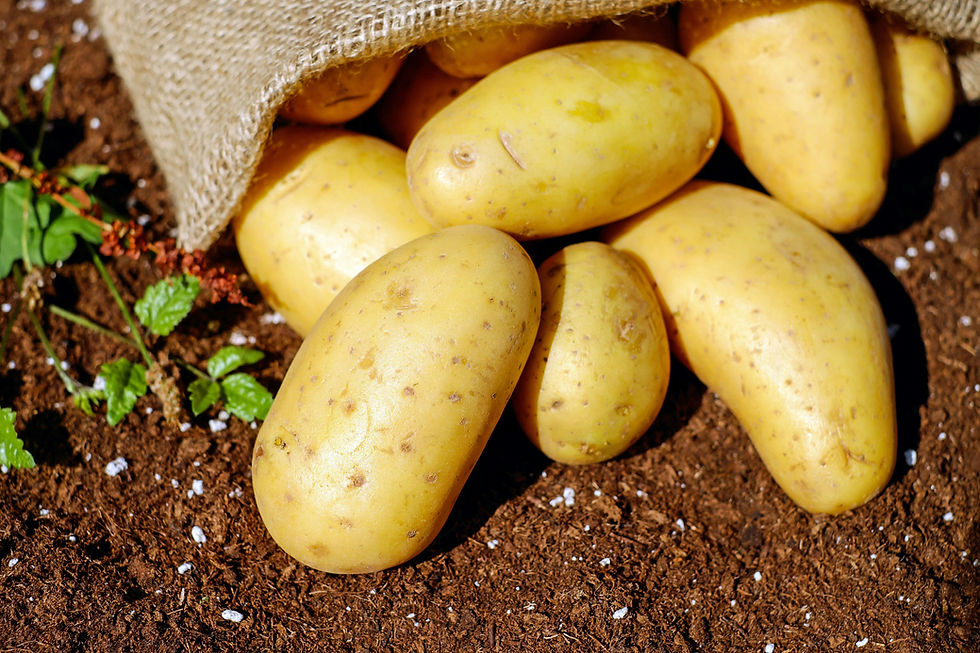
When you quiz most Americans on which state wears the potato crown, they'll likely yell, "Idaho!" And they'd be spot on! Idaho cranks out an eye-popping 6 million metric tons of taters every year, snagging the nickname "The Potato State"—though "Spudtacular State" sounds pretty a-peel-ing too!
HOW TO CHOOSE THE RIGHT POTATO IN RECIPES
Potatoes are the Swiss Army knife of veggies, with three main personalities: starchy, waxy, and all-purpose. Meet Russets and King Edwards, the starchy superheroes, ideal for frying, baking, or whipping up Gnocchi so good it could bring an Italian grandma to tears. But toss them into a stew, and they'll vanish quicker than your New Year's resolutions!
Waxy potatoes like Nadine and Dutch Cream are the divas of the potato world, with a sweet side and a low-starch ego. They're a bit of a flop at mashing, frying, or baking, but when it comes to boiling, roasting, and potato salads, they're the ones dancing on the tables! All-purpose potatoes, like Yukon Gold and Royal Blue, are the multitasking superheroes of the spud universe, ready to save the day in almost any dish you can dream up.
POTATO ORIGINS
Back in the 16th century, the Spanish were on a mission to win the ultimate game of "conquer all the things" in South America. In 1536, they bumped into potatoes and thought, "Hey, why not send these spuds on a European vacation to Spain!" Potatoes didn't make their grand entrance into the European scene until the 16th century. Sir Walter Raleigh tried to convince the Irish to join the potato party in 1589, but Europe took another 40 years to finally say, "Alright, alright, we'll give these tubers a whirl."
Back in the day, before potatoes bid farewell to South America, you could actually use them as currency. So yes, you could technically pay your rent with a side of fries!
Potatoes probably strutted onto the North American scene in the 1620s when the governor of Virginia received a box of them as a present. However, it wasn't until the 19th century that these spuds became the region's besties.
POTATO FACTS:
· Potatoes were once used as a medical remedy (because why not?)
· Packed with vitamin C and B-6, these guys are like the superheroes of the food world, minus the capes!
· Famous for its oddball healing tricks, like slipping raw potato slices into your socks to fight off colds (because nothing screams "wellness" like a pair of spud socks)
· Believe it or not, there's a museum dedicated to potatoes. Spud-tacular, right?
The Great Irish Famine (1845-1852) was the result of a pesky fungal villain that transformed potatoes into mushy, inedible blobs of goo. Luckily, we've now got blight-resistant spuds, so our beloved fries can rest easy and stay crispy.
THE POTATO CHIP
Legend has it that the birth of this crispy masterpiece was a happy accident involving Crum's sister. She was busy peeling potatoes when, oopsie-daisy, a thin slice took a dive into hot oil. And just like that, the potato chip made its grand entrance, turning snack time into an epic saga!
HOW TO STORE POTATOES
Want your potatoes to stay cheerful and delicious for ages? Give them a cozy spot in a cool, dark hideout like a pantry or kitchen cupboard with a nice breeze. Pop them in an open-topped bag or crate and let them chill. But watch out if they start going green—that's their sneaky way of saying, "Munch on me if you dare!"
5,000 VARIETIES
Potatoes are the Shakespearean lovers of the veggie universe, getting all mushy by mixing a male and female plant, then sprinkling the seeds from the female's flowery berries. Each little seed is a one-of-a-kind snowflake, just waiting to sprout, audition for the role of 'Best Spud,' and maybe even get cloned or find a new potato partner. It's a tater-tale of love!


Comments